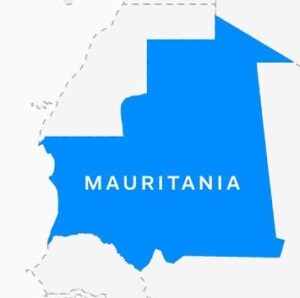
In Mauritania, a conservative Islamic republic on the West African coast, being gay, lesbian, or transgender is not simply a matter of social disapproval it is a matter of survival. Under the country’s strict application of Islamic law, both homosexuality and transgender identity are criminalized, leaving an entire community to live outside the protection of the state that governs them.
A Community Under Siege
For sexual and gender minorities in Mauritania, danger comes from every direction at once. Discrimination, harassment, and violence are not occasional failures of the system they are the system, enforced by both government authorities and society at large. Arrest, physical violence, and social ostracism are not distant fears; they are daily realities that shape how and whether these individuals can move through their own communities, workplaces, and even their own families.
To be visibly queer in Mauritania is to accept a level of risk that most people will never have to comprehend: the risk of losing your freedom, your safety, or your life, simply for existing as who you are.
Silencing the Silenced
The state does not stop at criminalizing identity — it actively works to prevent anyone from speaking about it. Freedom of speech and association are tightly restricted, and the government shows little tolerance for dissent of any kind, particularly on subjects it considers socially sensitive. For rights organizations and activists working on these issues, this creates a near-impossible landscape: it is not only dangerous to belong to this community, it is dangerous to advocate on its behalf.
This leaves activists with no legal avenue for organizing, no public platform for advocacy, and no institutional protection if their work draws hostile attention — whether from the state or from society.
Working in the Shadows, Refusing to Disappear
And yet, in spite of all of this, resistance persists. A small number of courageous activists continue to campaign for equal rights in Mauritania, most of them operating entirely underground. Unable to organize openly, they turn to social media and encrypted platforms to communicate, coordinate, and build the fragile networks of solidarity that sustain their community.
This is activism conducted at extraordinary personal cost. Every message sent, every connection made, carries the risk of exposure — to family, to community, to the authorities. These activists are not simply campaigning for policy change; they are keeping people alive, one quiet act of solidarity at a time.
A Struggle Far From Over
Today, this community remains almost entirely without legal or social protection. The activists working to change that reality face opposition on every front from a government unwilling to tolerate their existence, and from a society conditioned to see them as a threat rather than as fellow citizens.
But their persistence matters. Every act of underground organizing, every quiet act of visibility, every refusal to disappear is itself a form of resistance proof that even in one of the most hostile environments in the world for gender and sexual minorities, courage has not been extinguished.
Their fight is not only for rights on paper. It is for the basic right to exist without fear and it deserves the attention, solidarity, and support of the international community that has, for too long, looked away.